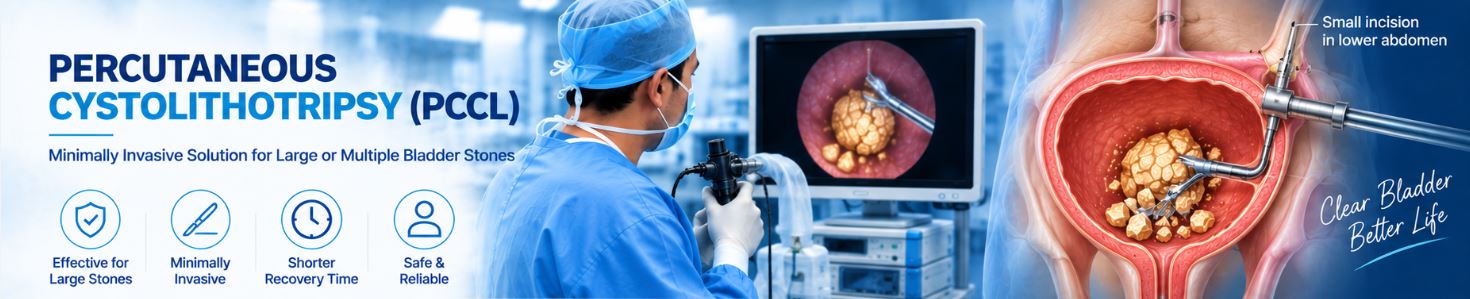
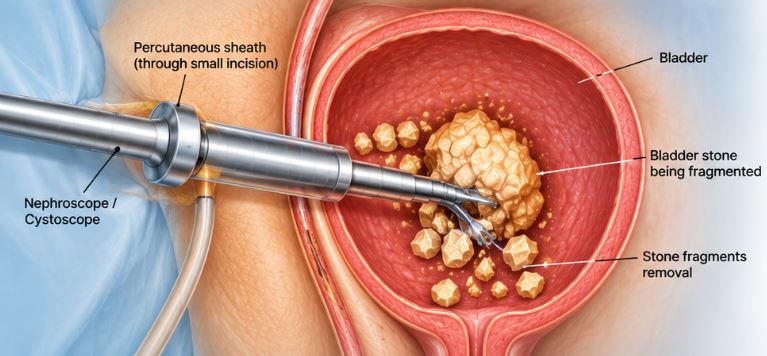
PCCL
PCCL uses a small access into the bladder to fragment and remove stones. It may be considered for selected larger bladder stones or when an endoscopic approach is less suitable.
Common Symptoms
Lower abdominal discomfort; painful urination; frequency; interrupted urine stream; blood in urine.
Causes of PCCL
Bladder stones may be associated with urinary stasis, incomplete bladder emptying, obstruction or other urinary tract problems.
Risk Factors
Enlarged prostate; urinary retention; neurogenic bladder; recurrent infection; urinary tract abnormalities.
Diagnosis
Urine tests; ultrasound; X-ray or CT when required; evaluation of bladder emptying.
Treatment Options
PCCL; endoscopic cystolithotripsy; treatment of the underlying cause.
Benefits of Treatment
Minimally invasive stone removal; useful for selected larger bladder stones; avoids conventional open stone surgery in suitable cases.
Recovery & Aftercare
Recovery depends on stone size and the underlying urinary condition. Follow-up is important to address the cause of recurrence.
Prevention
Adequate hydration; treatment of bladder outlet obstruction; management of urinary retention and recurrent infection.
Possible Complications
Bleeding; infection; bladder injury; residual fragments, with complications varying by patient and procedure.
When Should You Consult a Doctor?
You May Also Be Interested In
Explore other advanced urology treatments offered by our clinic.
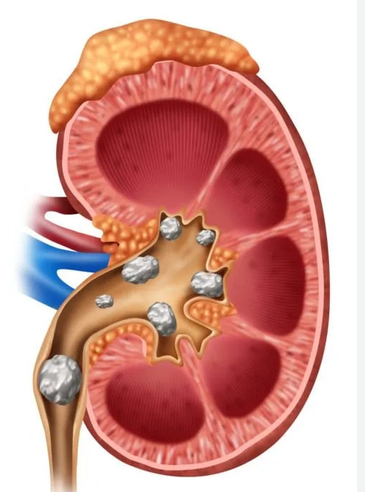
Kidney Stone Treatment
Advanced diagnosis and minimally invasive treatment for kidney stones using Laser Lithotripsy, RIRS, PCNL and other modern techniques with faster recovery.
Read More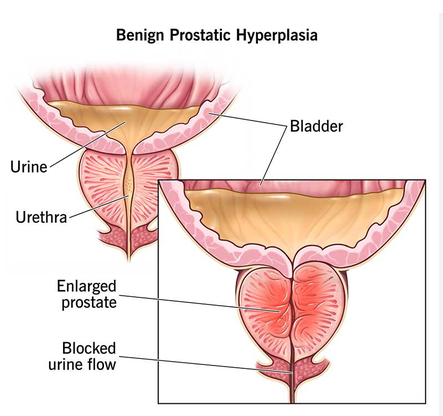
Enlarged Prostate (BPH)
Advanced diagnosis and minimally invasive treatment for Enlarged Prostate (Benign Prostatic Hyperplasia - BPH) using Laser Prostate Surgery, TURP and other modern procedures.
Read More
Female Urology
Comprehensive diagnosis and advanced treatment for female urinary disorders including urinary incontinence, recurrent urinary tract infections, overactive bladder, pelvic floor disorders and bladder dysfunction.
Read More