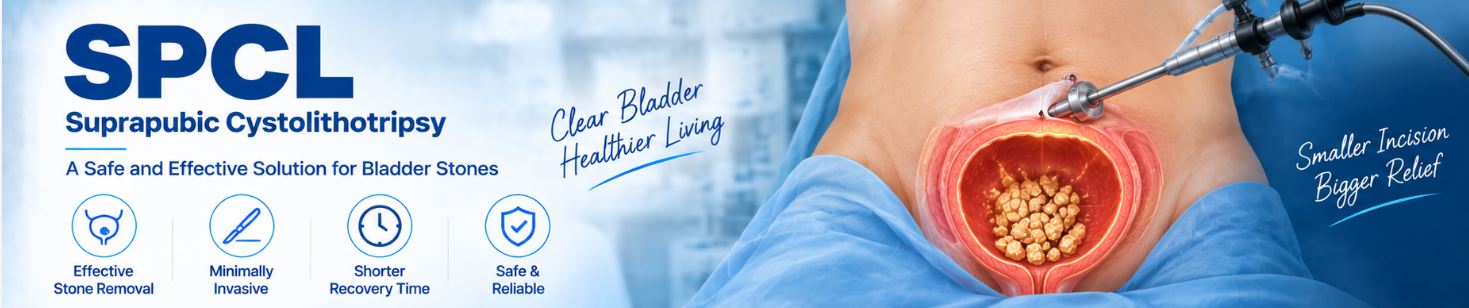
SPCL
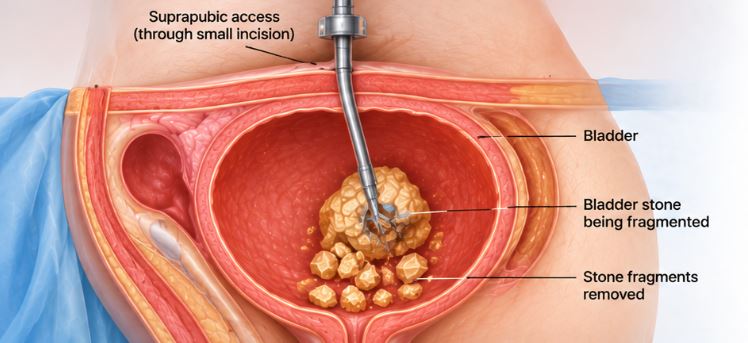
SPCL provides access to the bladder through a small suprapubic tract so that suitable bladder stones can be fragmented and removed. The approach is selected according to stone characteristics and patient anatomy.
Common Symptoms
Lower abdominal pain; painful urination; urinary frequency; interrupted urine flow; blood in urine.
Causes of SPCL
Bladder stones can result from urinary stasis, incomplete bladder emptying, obstruction or urinary tract abnormalities.
Risk Factors
Enlarged prostate; urinary retention; neurogenic bladder; recurrent infection; previous urinary procedures.
Diagnosis
Urine tests; ultrasound; X-ray or CT when appropriate; evaluation of bladder emptying.
Treatment Options
SPCL; endoscopic cystolithotripsy; other approaches based on stone size and clinical factors.
Benefits of Treatment
Direct access to the bladder; minimally invasive stone removal; useful in selected patients.
Recovery & Aftercare
Recovery varies with stone burden and associated urinary problems. Follow-up is required to reduce recurrence.
Prevention
Treat bladder outlet obstruction or retention; adequate hydration; manage recurrent infection; follow stone-prevention advice.
Possible Complications
Bleeding; infection; bladder injury; temporary urinary symptoms.
When Should You Consult a Doctor?
You May Also Be Interested In
Explore other advanced urology treatments offered by our clinic.
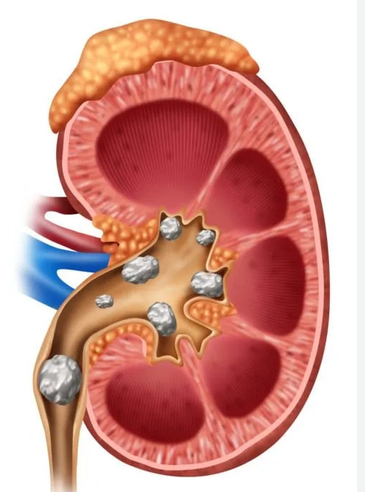
Kidney Stone Treatment
Advanced diagnosis and minimally invasive treatment for kidney stones using Laser Lithotripsy, RIRS, PCNL and other modern techniques with faster recovery.
Read More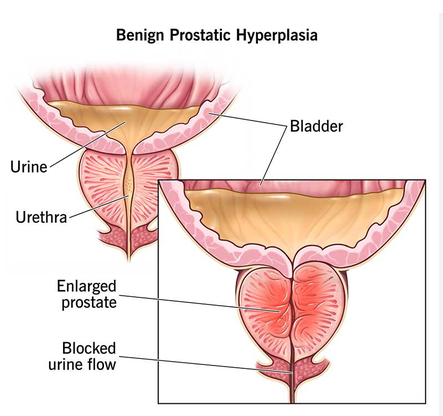
Enlarged Prostate (BPH)
Advanced diagnosis and minimally invasive treatment for Enlarged Prostate (Benign Prostatic Hyperplasia - BPH) using Laser Prostate Surgery, TURP and other modern procedures.
Read More
Female Urology
Comprehensive diagnosis and advanced treatment for female urinary disorders including urinary incontinence, recurrent urinary tract infections, overactive bladder, pelvic floor disorders and bladder dysfunction.
Read More