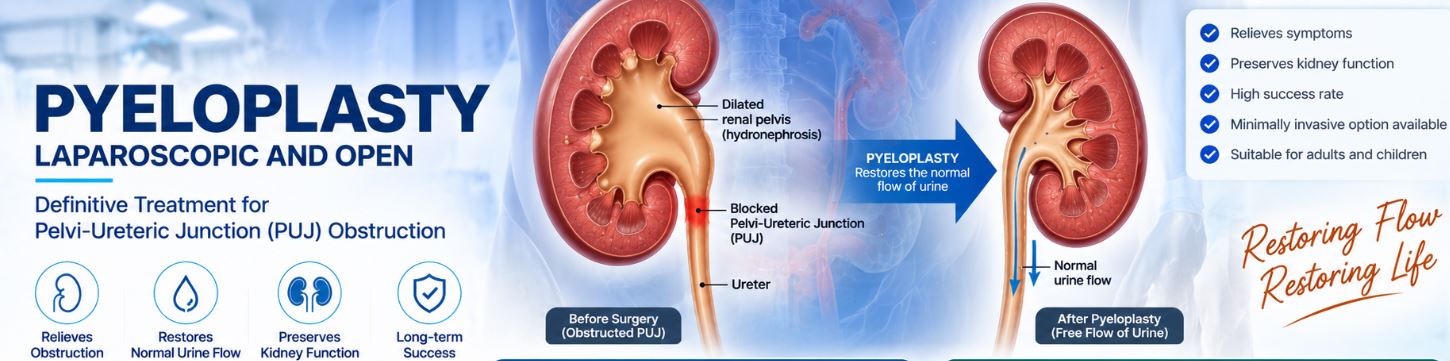
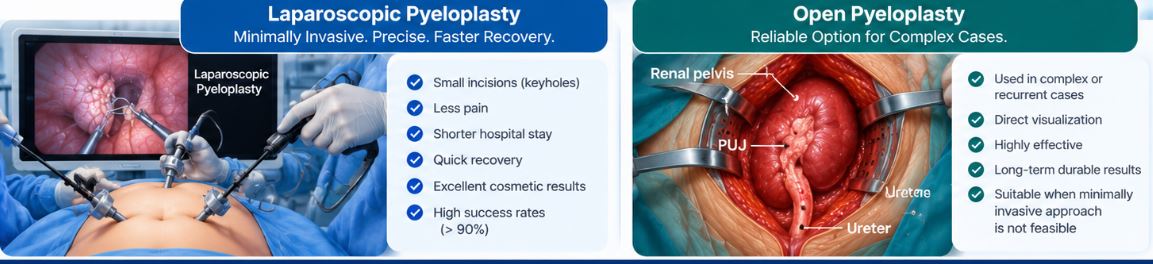
PYELOPLASTY LAP AND OPEN
Pyeloplasty reconstructs the narrowed pelvi-ureteric junction to restore drainage from the kidney into the ureter. The surgical approach is selected according to age, anatomy, previous surgery and clinical circumstances.
Common Symptoms
Flank pain; recurrent urinary infection; blood in urine in selected cases; impaired drainage or kidney function in significant obstruction.
Causes of PYELOPLASTY LAP AND OPEN
Pelvi-ureteric junction obstruction may be congenital or develop after previous inflammation, surgery or other causes.
Risk Factors
Congenital narrowing; crossing blood vessels; previous surgery or scarring; urinary tract abnormalities.
Diagnosis
Ultrasound; functional renal scan; CT or other imaging when indicated; urine and blood tests.
Treatment Options
Laparoscopic pyeloplasty; open pyeloplasty; selected non-surgical approaches in specific situations.
Benefits of Treatment
Restores urinary drainage; relieves obstruction; may preserve kidney function when treated appropriately.
Recovery & Aftercare
Recovery varies by approach. A temporary ureteric stent is commonly used and is removed later as advised.
Prevention
Regular follow-up imaging; prompt treatment of urinary infection; maintain adequate hydration as advised.
Possible Complications
Infection; bleeding; urine leakage; recurrent narrowing; need for further intervention in selected cases.
When Should You Consult a Doctor?
You May Also Be Interested In
Explore other advanced urology treatments offered by our clinic.
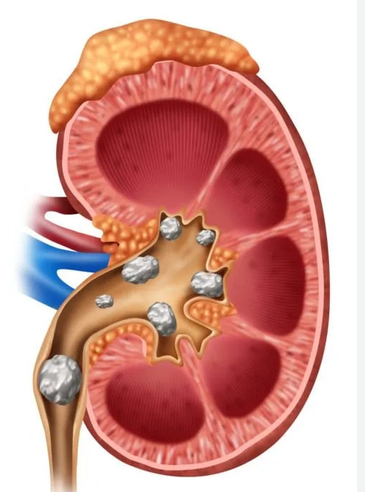
Kidney Stone Treatment
Advanced diagnosis and minimally invasive treatment for kidney stones using Laser Lithotripsy, RIRS, PCNL and other modern techniques with faster recovery.
Read More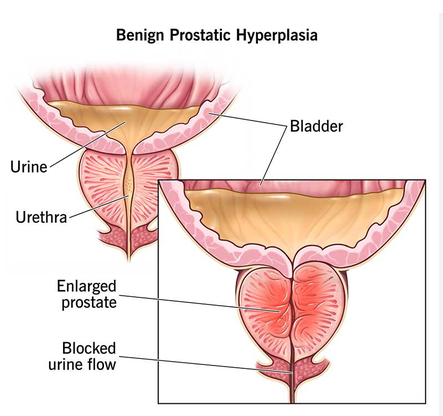
Enlarged Prostate (BPH)
Advanced diagnosis and minimally invasive treatment for Enlarged Prostate (Benign Prostatic Hyperplasia - BPH) using Laser Prostate Surgery, TURP and other modern procedures.
Read More
Female Urology
Comprehensive diagnosis and advanced treatment for female urinary disorders including urinary incontinence, recurrent urinary tract infections, overactive bladder, pelvic floor disorders and bladder dysfunction.
Read More