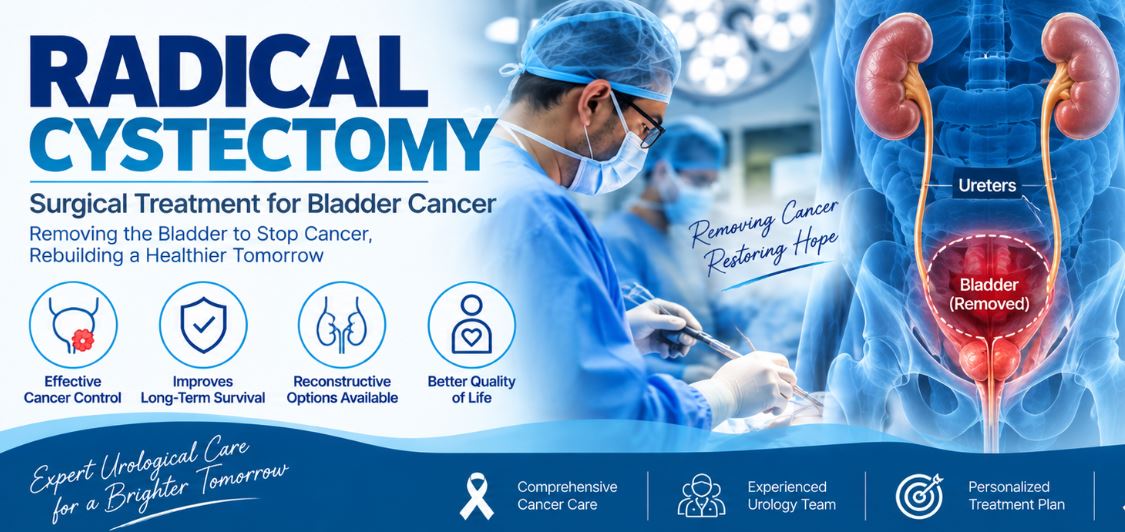
RADICAL CYSTECTOMY
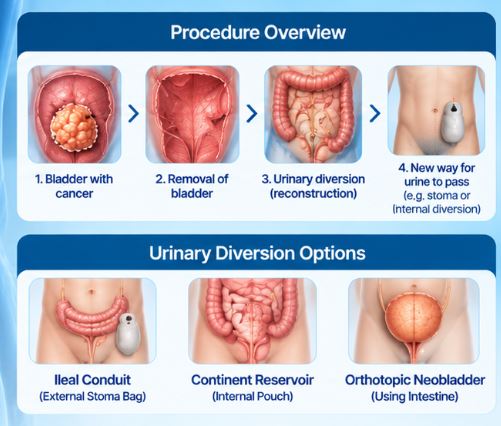
Radical cystectomy removes the bladder and nearby tissues as appropriate for the cancer. Pelvic lymph nodes are commonly assessed, and a urinary diversion is created to provide a new route for urine.
Common Symptoms
Blood in urine; urinary frequency; urgency; pelvic symptoms; symptoms may be absent in early disease.
Causes of RADICAL CYSTECTOMY
Bladder cancer develops from abnormal cells of the bladder lining and may have several contributing risk factors.
Risk Factors
Smoking; certain occupational chemical exposures; increasing age; previous cancer treatment and other risk factors.
Diagnosis
Urine tests; cystoscopy; TURBT pathology; CT or MRI and other staging investigations when indicated.
Treatment Options
Bladder-preserving treatment for selected patients; radical cystectomy; systemic treatment according to cancer stage.
Benefits of Treatment
Definitive local treatment for selected invasive bladder cancers; allows detailed pathological staging.
Recovery & Aftercare
Recovery is longer than after endoscopic procedures and includes learning care of the selected urinary diversion. Follow-up is essential.
Prevention
Stop smoking; follow oncology/urology surveillance; maintain nutrition and activity as advised.
Possible Complications
Bleeding; infection; bowel complications; blood clots; urinary diversion complications; sexual or reproductive effects depending on the individual.
When Should You Consult a Doctor?
You May Also Be Interested In
Explore other advanced urology treatments offered by our clinic.
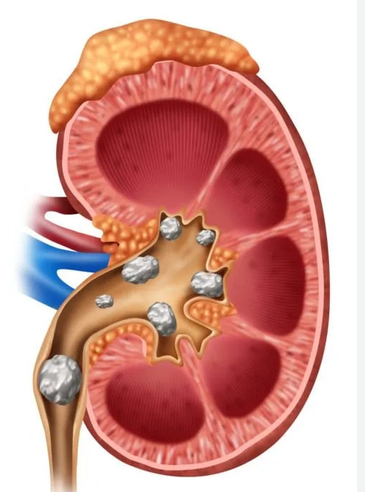
Kidney Stone Treatment
Advanced diagnosis and minimally invasive treatment for kidney stones using Laser Lithotripsy, RIRS, PCNL and other modern techniques with faster recovery.
Read More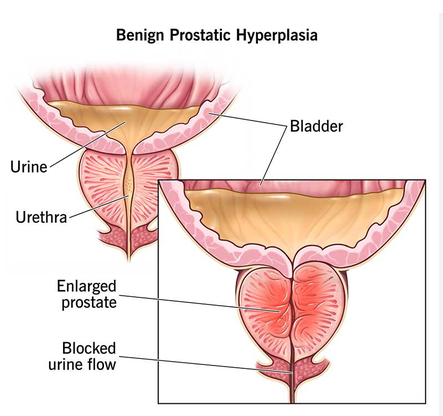
Enlarged Prostate (BPH)
Advanced diagnosis and minimally invasive treatment for Enlarged Prostate (Benign Prostatic Hyperplasia - BPH) using Laser Prostate Surgery, TURP and other modern procedures.
Read More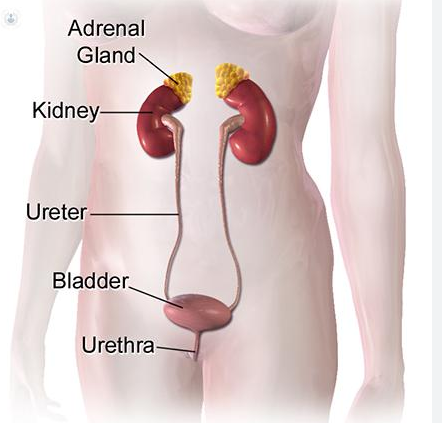
Female Urology
Comprehensive diagnosis and advanced treatment for female urinary disorders including urinary incontinence, recurrent urinary tract infections, overactive bladder, pelvic floor disorders and bladder dysfunction.
Read More